The mount Toubkal winter climb is one of those trips that feels close and wild at the same time. At 4,167 meters, when the High Atlas is wrapped in snow, the highest peak in North Africa turns a trek that is often described as straightforward into something that demands real mountain judgment. Winter doesn’t make the route exotic or technical in the way a big Alpine face might be, but it does make every simple thing, such as foot placement, pacing, navigation, staying warm as well as hydrated, more serious. The reward is a version of the Atlas that many visitors never see, with quiet trails, crisp air, hard light, and the sense that you are moving in winter.
Mount Toubkal Winter Climb
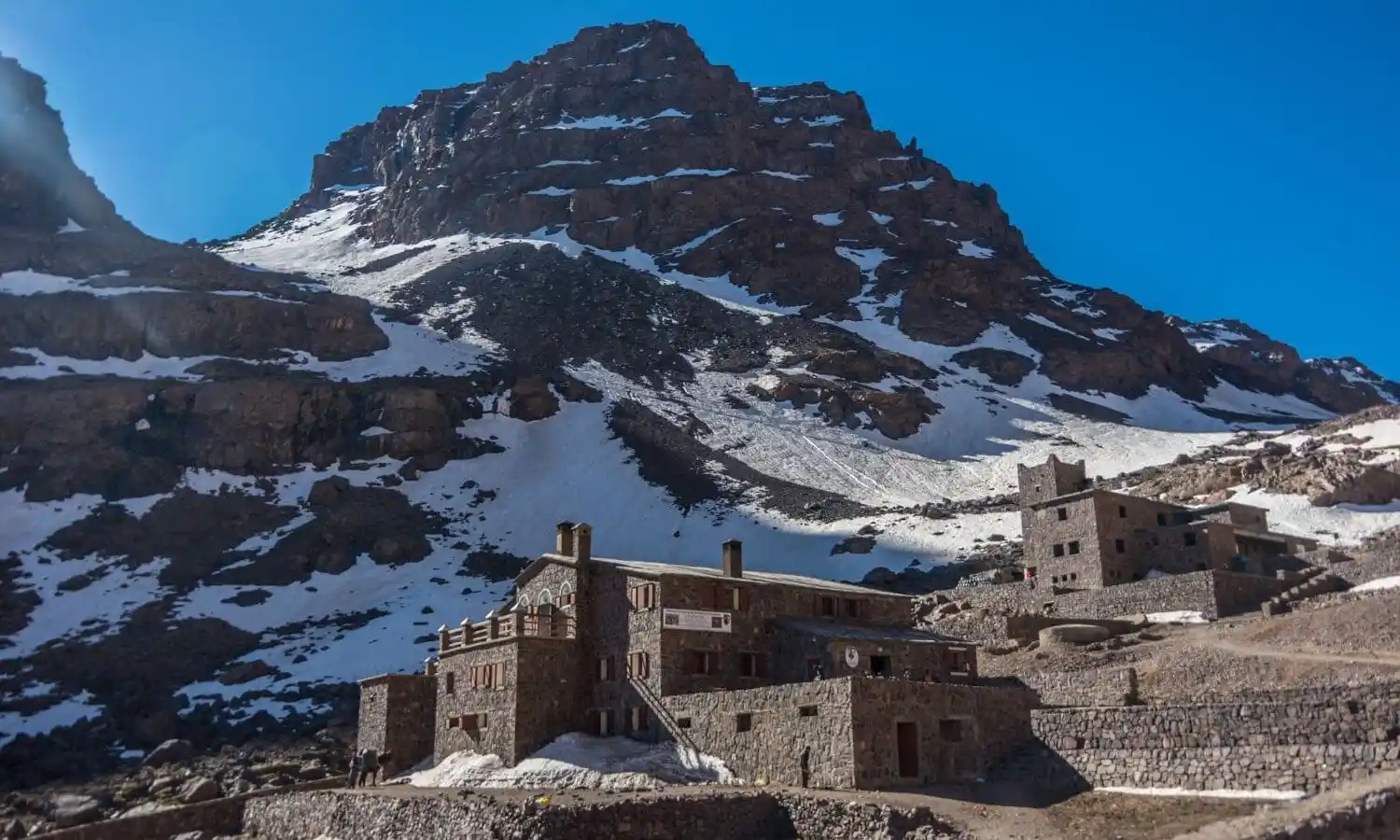
The mount Toubkal winter climb begins in Imlil, a village in the Aït Mizane valley that has become the main gateway to the massif. Even before you shoulder a pack, the season announces itself here. Nights are cold, water can freeze, and morning air has that clean bite that makes you pull your collar up while you drink mint tea. The approach to the refuge, often called the Toubkal one, with two main lodges close together, usually takes a few hours, and in summer it can feel like a busy hiking highway.
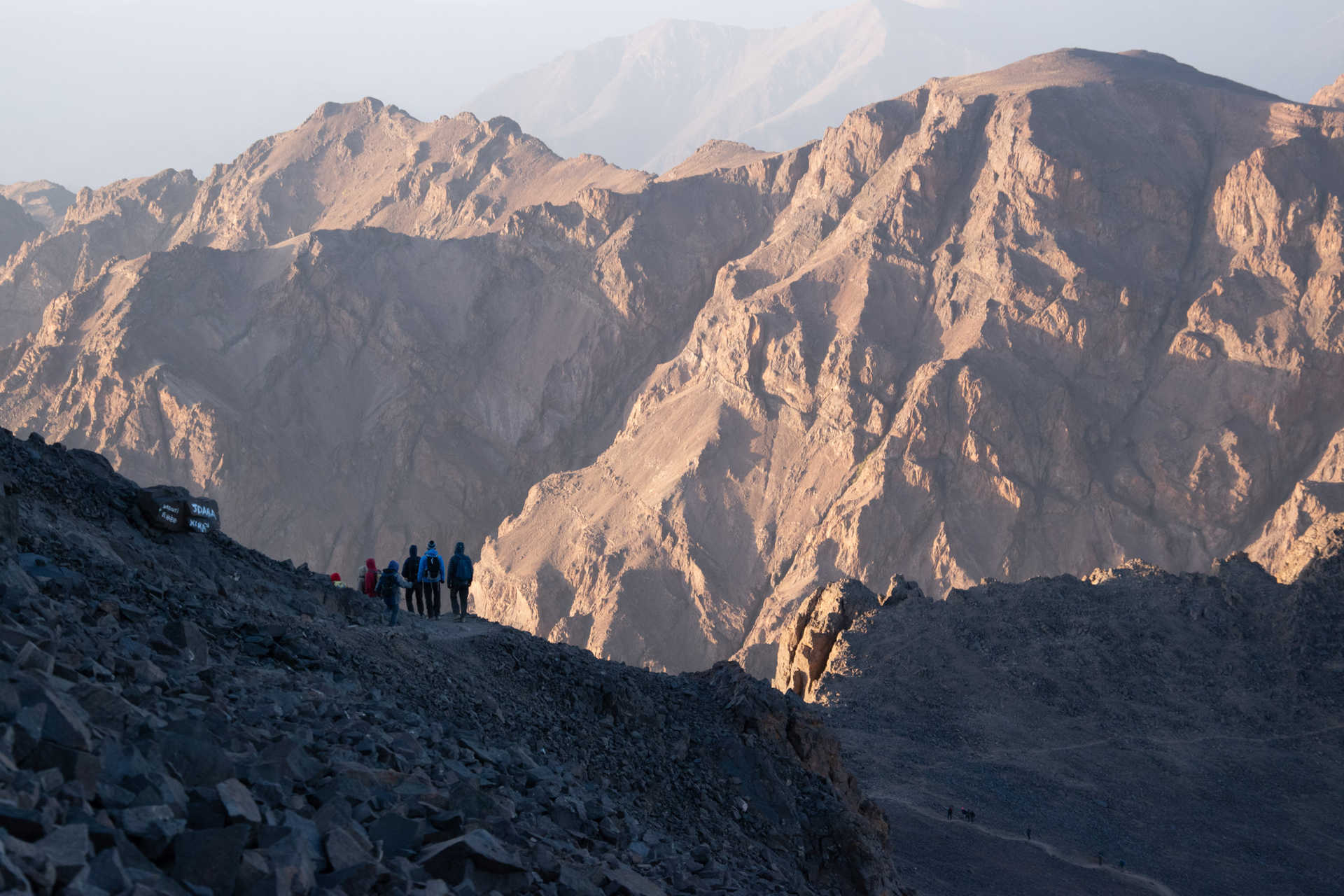
For a mount Toubkal winter climb, the same path can be silent except for crunching snow and the sound of the river under ice. Depending on recent storms, you might walk on packed snow, break trail through fresh powder, or encounter hard, shiny sections where microspikes or crampons suddenly go from maybe to absolutely. With Toubkal Expedition, a typical winter itinerary is two days, Imlil to refuge on day one, summit, then down. That sounds simple on paper, but winter adds friction in all the places you least want it.
The first is temperature management. You warm up quickly when starting the mount Toubkal winter climb and cool down fast when you stop, so clothing becomes a constant balancing act. Layers matter more than a single big jacket. You want to move without sweating too much, because dampness is the enemy when the wind picks up. The second is daylight. Winter days are shorter, which often means an early summit start in the dark. Headlamps bob along the valley, and the cold at 04 a.m. can feel like it has weight, but there is also something special about that pre-dawn climb.
Snow conditions define the character of the mount Toubkal winter climb. The standard route generally follows the same broad line as the summer ascent, but mood changes with the snowpack. After storms, the slopes above the refuge can hold soft snow that makes every step a small battle. Later, a freeze-thaw cycle can turn the surface firm and fast, the kind of snow that accepts crampon points with a satisfying bite. Sometimes you get a mix, a hard crust with pockets of powder, or wind-scoured ridges where rock peeks through.
The wind is the other big factor in a mount Toubkal winter climb. The upper mountain can be surprisingly exposed, and gusts on the ridge can steal warmth and confidence at the same time. In calm weather, the ascent feels steady and almost meditative. In strong wind, the same ridge can feel like a test of patience, where you lean into the gusts and keep your movements deliberate. Altitude is an understated challenge. Many people reach the High Atlas from much lower elevations, and even though Toubkal is not extremely high by global standards, 4,167 meters is enough to humble you.
In a mount Toubkal winter climb, season amplifies the effect because the cold discourages drinking and the body works harder in snow. Good acclimatization helps. Some climbers spend an extra night at the refuge or take a side hike the first day to gain a bit of height before sleeping. Others accept that the summit might require more frequent rests and a slower pace. The key is not to chase the top with stubbornness. Winter mountains are very good at punishing ego, and very generous to those who listen and adjust.
The refuge itself is part of the mount Toubkal winter climb. It’s warm compared to outside, busy at times with climbers from different countries, and filled with that familiar mix of damp gloves, steaming bowls of soup, and nervous excitement about the next morning. Winter routes encourage an earlier bedtime, but sleep can be light. Altitude, anticipation, and the occasional clatter of someone preparing gear all conspire against deep rest. Still, there is comfort in the routine, with checking the forecast, packing snacks where you can reach them with gloves on, filling bottles, laying out layers, and making sure you have what you need for a long cold climb.
Equipment in a mount Toubkal winter climb is less about looking professional and more staying safe and efficient. Footwear must be warm enough to prevent numb toes, traction should match the likely conditions, and eye protection matters because the sun on snow can be blinding. A headlamp with good batteries, gloves that work in wind, and a plan for water that won’t freeze are small details that can make or break a summit day. Many people choose to climb with a local guide in winter, not because the route is complicated in summer, but as snow can disguise the path and local experience is valuable when conditions change quickly.
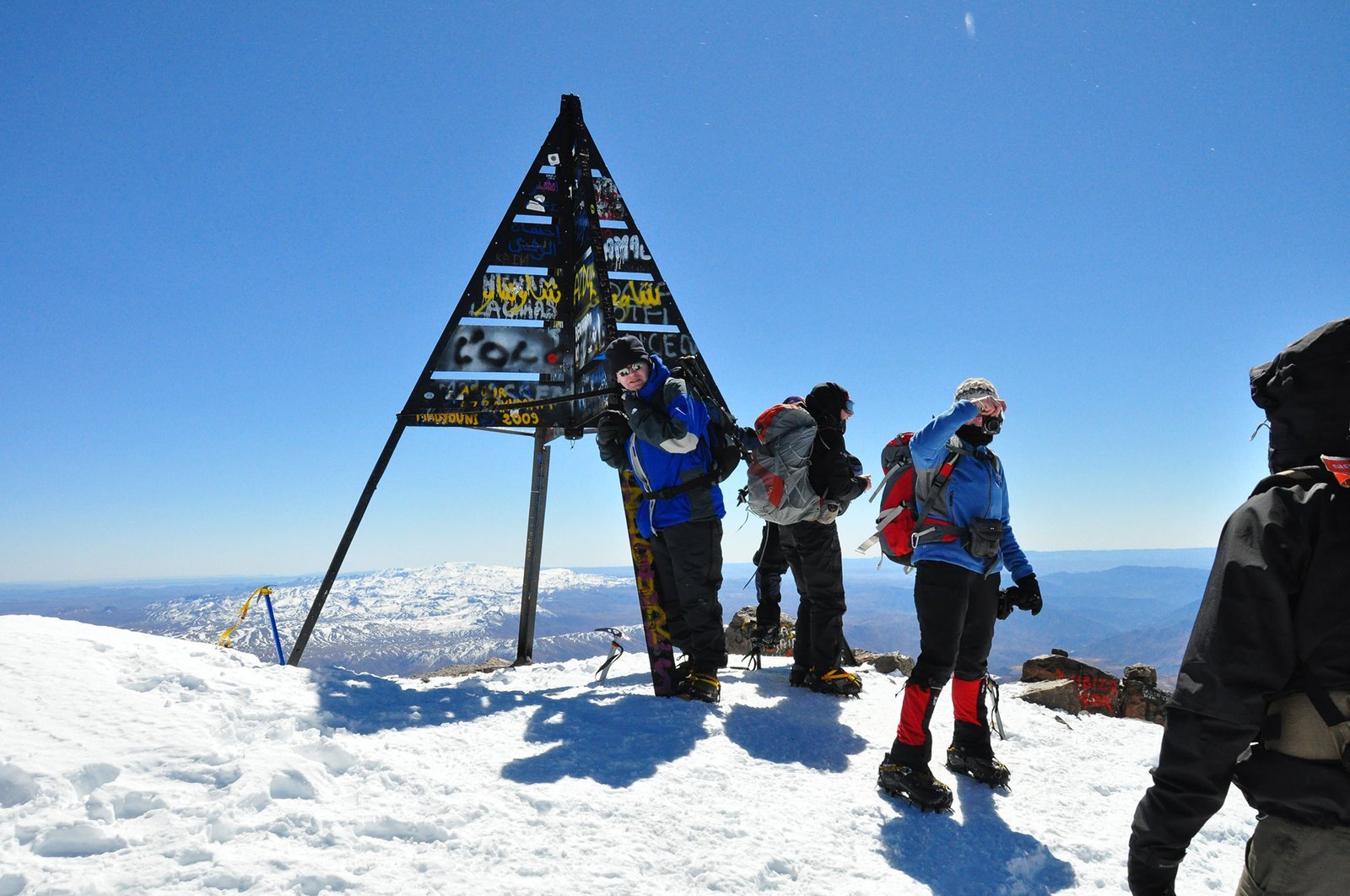
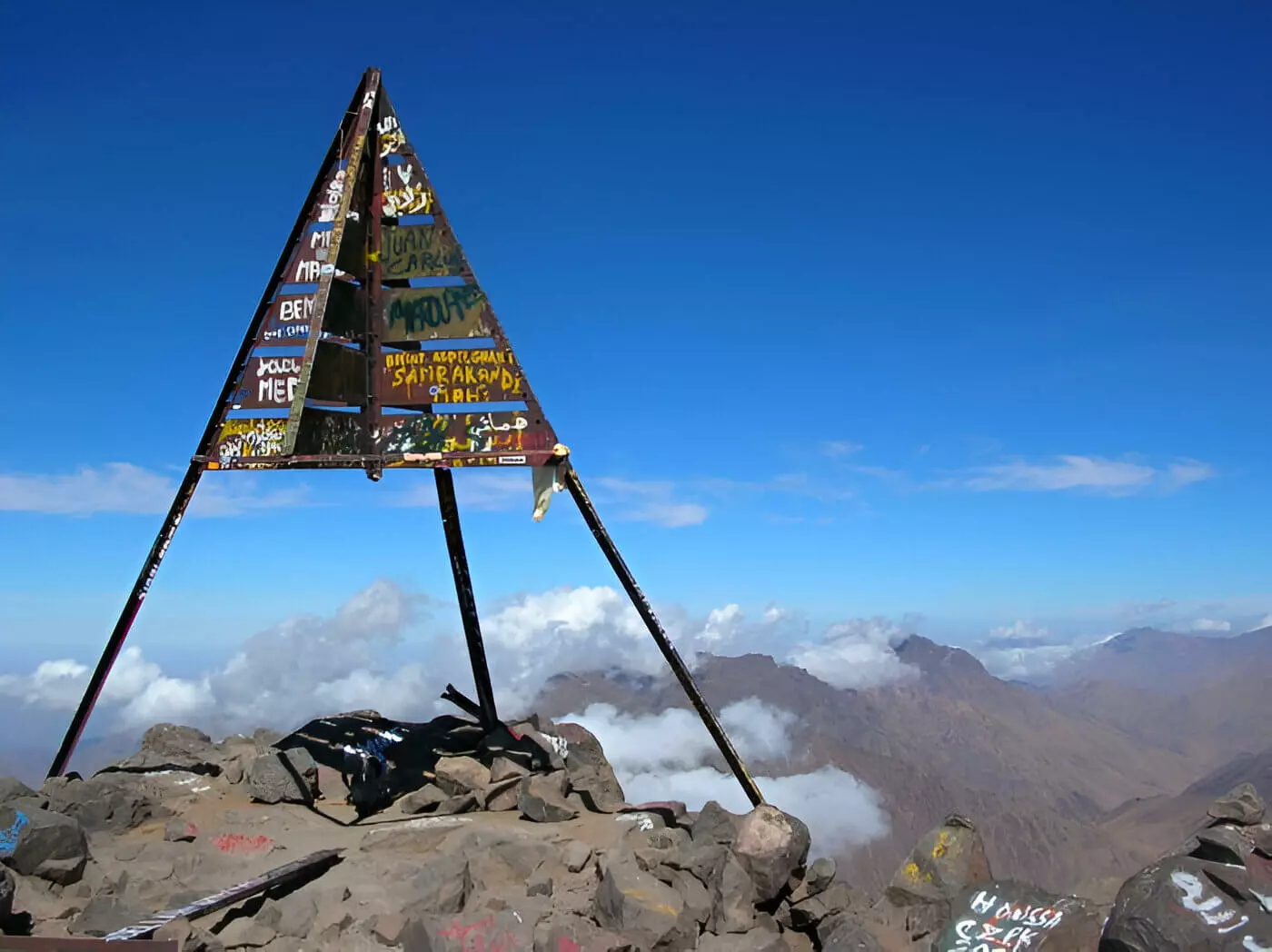
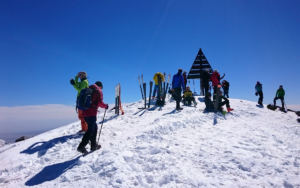
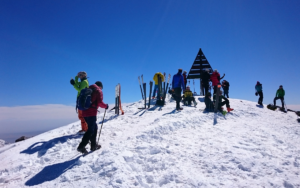
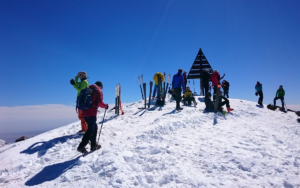
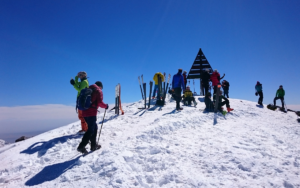
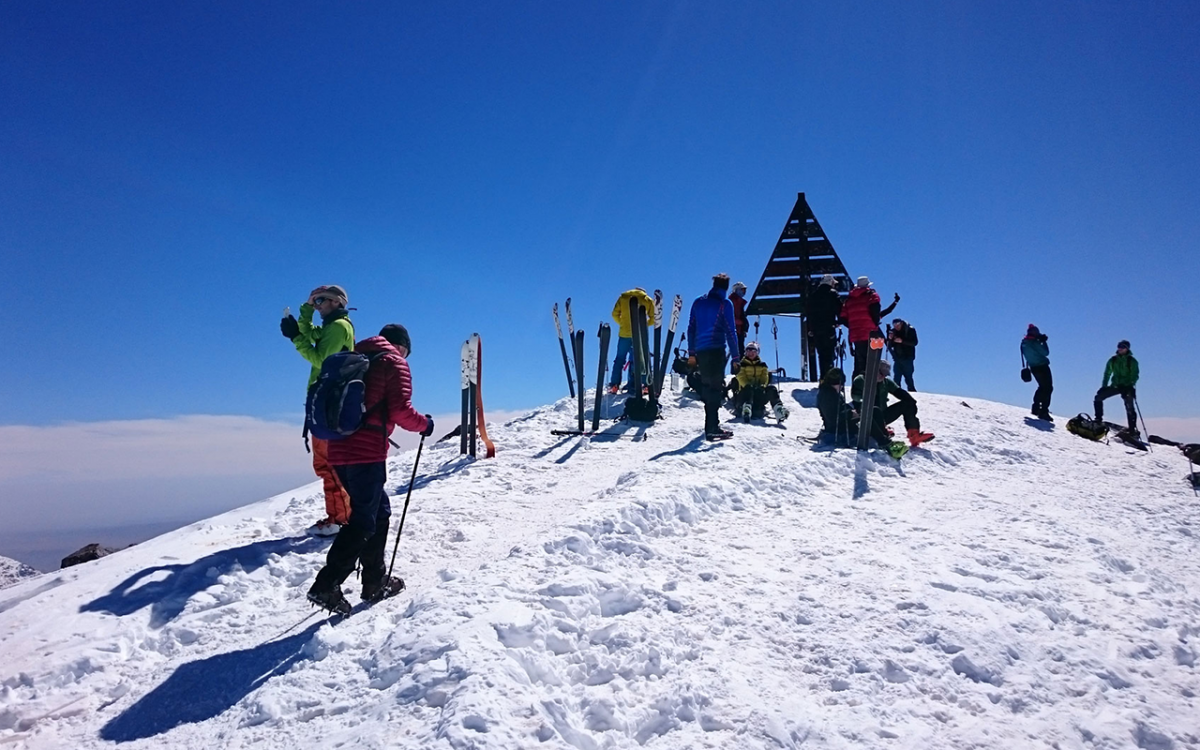
Reaching the summit in a mount Toubkal winter climb feels earned. The summit is marked by a metal pyramid, and on a clear day the view is huge, with the Atlas rolling away in layered ridges, valleys stitched with villages, and, far beyond, the hazy suggestion of the plains. What surprises many climbers is how quickly cold can take over when you stop. Summit photos are fast, gloves go back on immediately, and the descent begins before the body cools too much. Downclimbing in snow requires attention.
Hard snow can be slick, soft snow may hide rocks, and fatigue can make small slips more likely, but as you drop lower, air thickens, cold loosens its grip, and the refuge appears like a promise of tea and warmth. A Mount Toubkal winter climb is not just about standing on a high point, but learning the pace of a winter mountain, respecting its quiet hazards, and moving through the High Atlas in a season that sharpens everything, from light, to the cold, effort, and satisfaction. When you finally return to Imlil, boots dusty with a mix of snow and grit, the summit already feels slightly unreal, like a bright cold dream.